
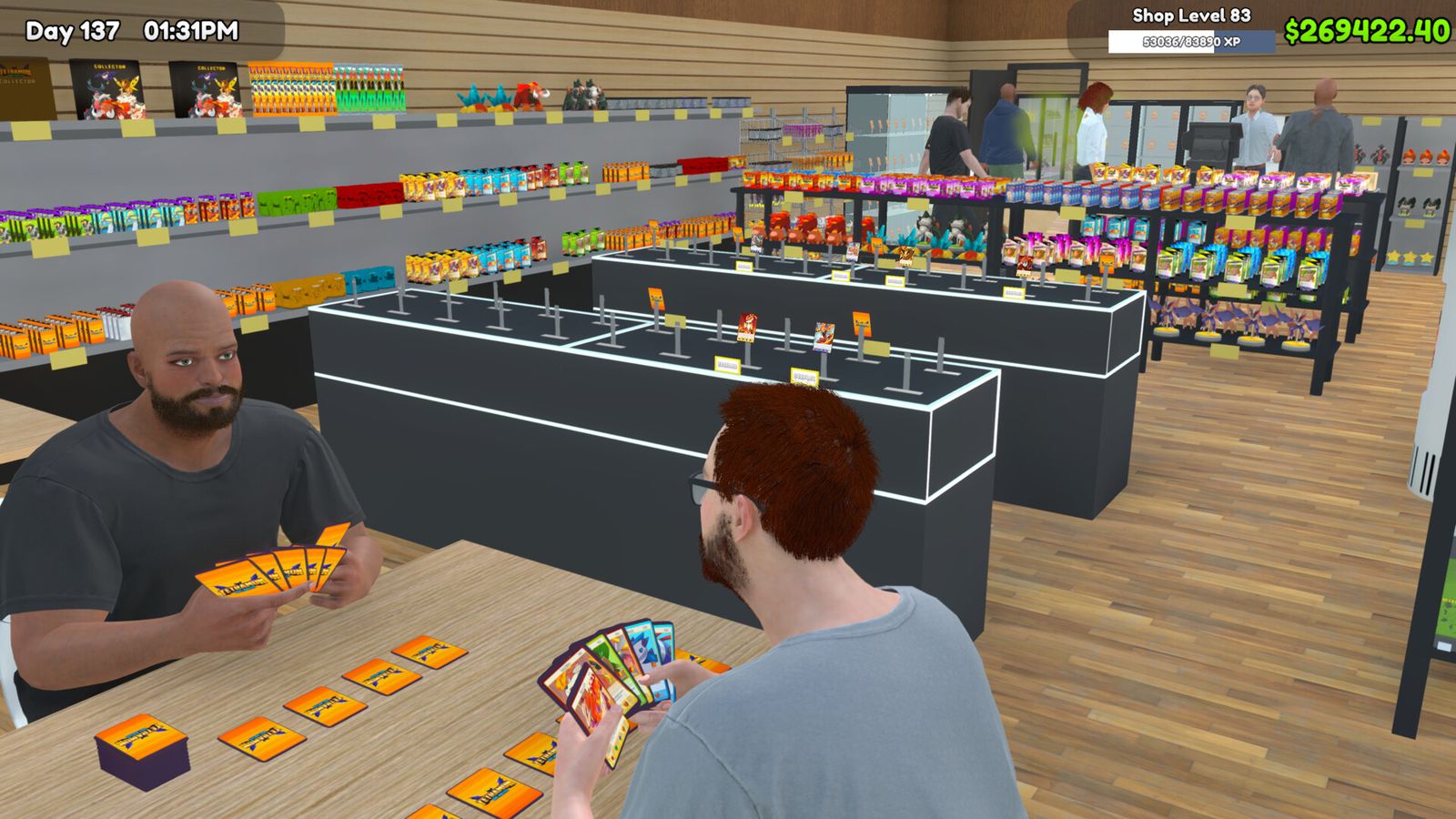
TCG Card Shop Simulator Money Guide: What Actually Sells
Which products carry the best margin in TCG Card Shop Simulator, how high you can price them, and what to do with cheap cards that never sell.

The fastest way to make money is to sell less. Pick the most profitable product you have unlocked, fill every shelf with it, and leave the rest in storage.
That sounds backwards, and it is the single most repeated finding in the game’s community.
Why a narrow shop beats a full one
Customers in this game choose a shelf at random. Their basket size then scales with how many units sit on that shelf.
Wide stock spreads the same units across many shelves. Narrow stock piles them up. Fewer, fuller shelves means bigger baskets from the same foot traffic.
| Approach | What happens | Observed result |
|---|---|---|
| Everything in stock | Customers pick cheap shelves | Low average basket |
| Two or three lines | Higher chance of a big shelf | Moderate result |
| One high-margin line | Every visit hits your best product | Best recorded revenue |
One creator recorded 149 customers and 100 checkouts in a single day using the one-product method. Revenue hit $44,460 with roughly $25,000 of real profit. Average basket was 3.9 boxes at about $60 profit each.
A second creator used the same idea and reached $48,000 profit in one day, which was enough to unlock the $30,000 daily profit achievement.
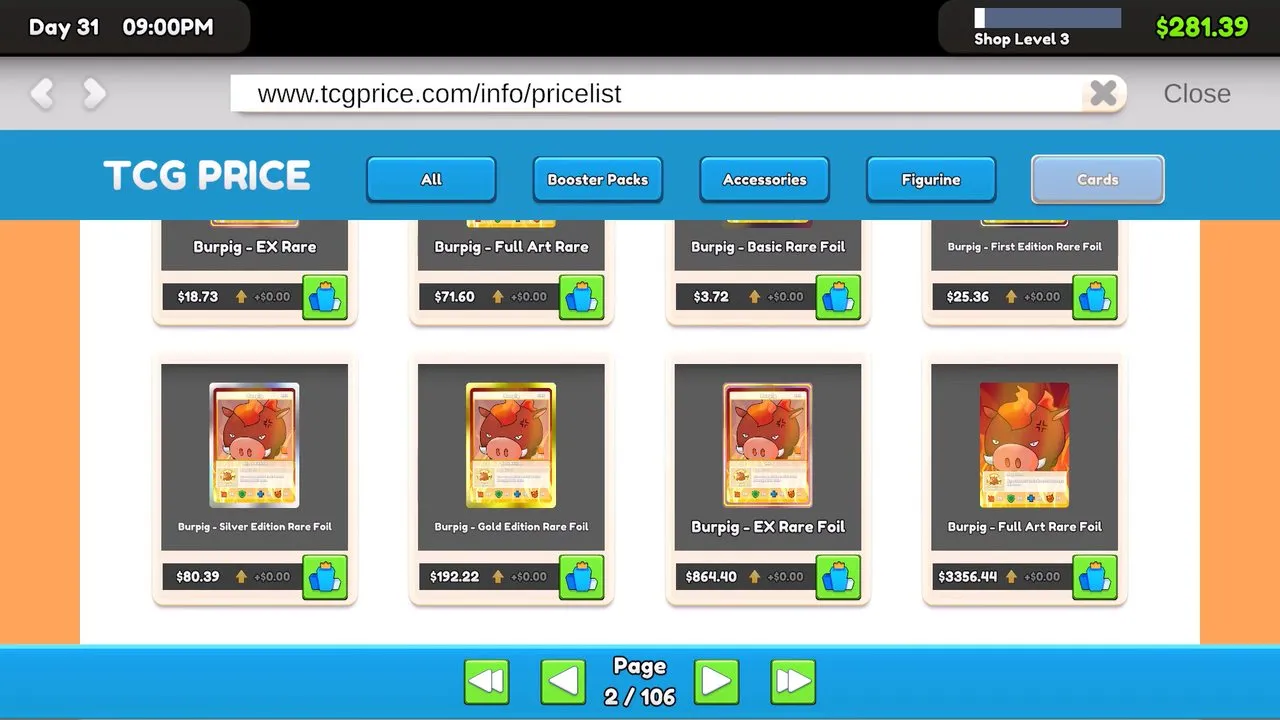
Price at market, then round
Market price gives the best purchase chance once a customer is standing at the shelf. Going noticeably above it pushes them away, one creator measured that jump as roughly 90% down to 75%.
Round every price anyway. Cash customers force you to hand back change, and every extra second at the register costs you a customer later in the day.
Move cheap cards in bundles, never singly
Cards under about a dollar should never reach a shelf. Use the workbench and turn them into bulk bundles instead.
Two shortcuts make this quick:
- Open your binder, hold the grab key and right-click to select many cards at once rather than one by one.
- Keep bulk bundles as a permanent shelf line if they sell in your shop; otherwise treat them as a pure dumping ground.
Speed up the register before you expand
Revenue per hour depends on how fast customers leave the building. A queue at the register blocks new arrivals from spawning.
Two registers and a fast cashier beat a bigger shop. Put yourself on the till until you have unlocked Clark Cash at level 25, and keep everyone else stocking.
The late-game income nobody uses early
Hosting events is where the money curve changes shape. Once you own playing tables and unlock higher event tiers, customers pay an hourly rate that climbs with each unlocked format.
The important detail is that the highest tier you can run is almost always the right one. Its_Phantom_Fam notes the market fee rises with each new event, with Golden Star sitting at $22 per hour at the point that video was recorded.
Tables also cut into shelf sales if you place them too early, because customers who sit down stop buying packs. Think of them as a later-game investment.
What the numbers are worth
The revenue figures above come from two creators recording Early Access builds. Patch 1.0 changed Tetramon card values and added 1,452 new cards, so the most profitable product in your save may not match theirs.
There is no published margin table from the developer. The reliable rule is not a specific product name, it is the pattern: within any unlocked tier, sell the most expensive box you can stock.
Related Articles
cards
TCG Card Shop Simulator Card Grading: Costs, Timing and Odds
The four grading services in TCG Card Shop Simulator with their prices and turnaround, plus the probability pools that decide whether a card comes back a 10.
guide
TCG Card Shop Simulator Beginner Guide: Your First Days
What to stock, how to price it, how to stop smelly customers, and which upgrades pay for themselves in the first days of TCG Card Shop Simulator.